
Car Pet Hair Removal
Why Can Pet Hair Stay Trapped in Car Carpets After Vacuuming?
Pet hair can become worked into carpet fibers, fabric, and seams, where an ordinary vacuum may not lift it with loose surface debris. If hair stays caught in the cabin after routine cleaning, identify the affected materials and areas for a more focused review.
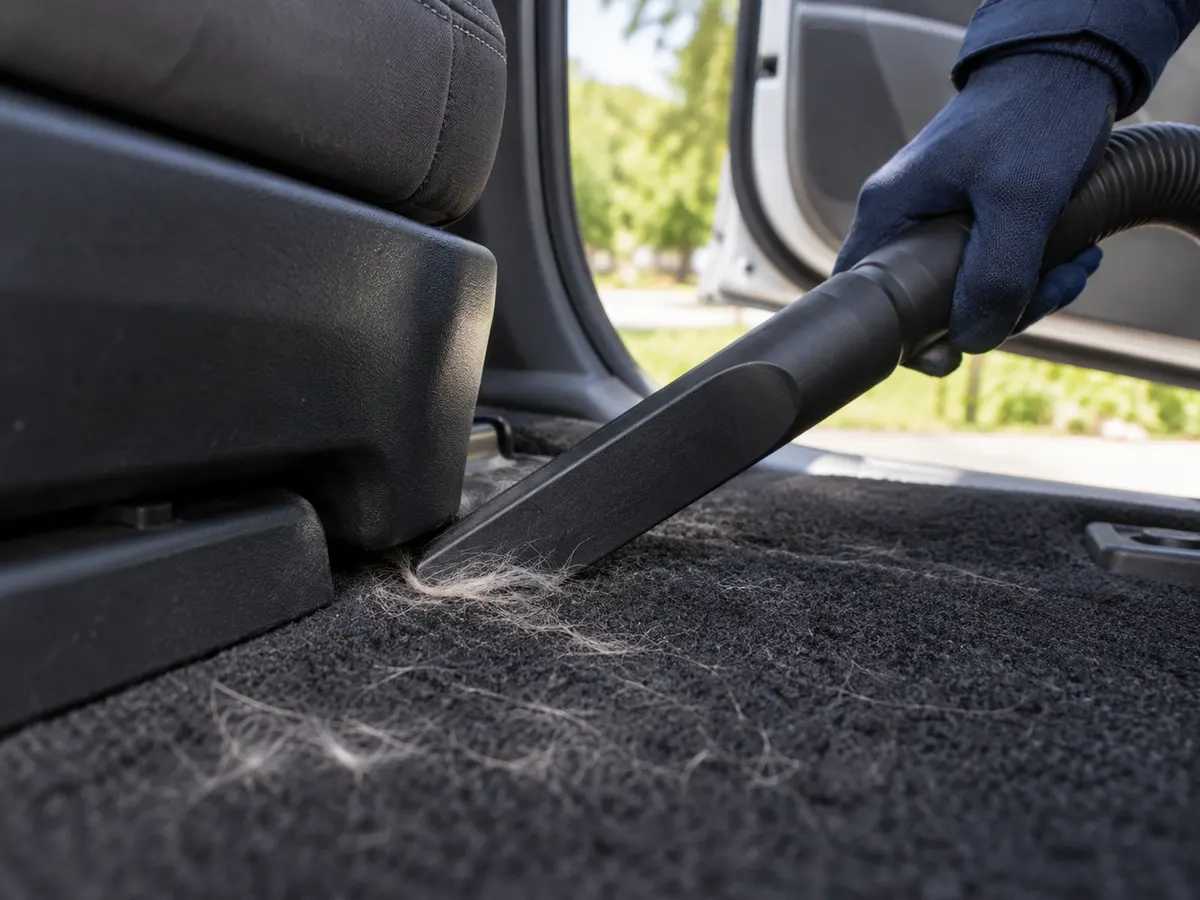
Map where the hair has collected
Carpet fibers, upholstery texture, and seams can hold hair in place after loose strands have been vacuumed away. Identify the seats, carpets, mats, cargo area, or other interior sections affected, and say whether the hair looks loose or worked into fabric. The affected areas help define the quote.
Vehicle layout matters too. Tell us the vehicle size and whether you want attention for a specific row, the trunk or cargo space, or more of the interior. Clear loose belongings and valuables from those areas so the requested work can focus on the surfaces you identified.
Include related stains or odors
Pet-related requests can include more than hair. Mention any staining, odor, or other buildup you have noticed, even if you are unsure whether it needs a separate service. The team can review the condition and explain any additional work before confirming the quote.
Heavy or embedded hair may require more attention than routine vacuuming. No service description guarantees that every strand can be removed from every material. Share your expectations and the affected surfaces so the scope can be discussed clearly.
Decide whether you also want a full interior clean
Targeted pet-hair removal focuses on the areas you describe. An interior detail is a broader cabin service that can include vacuuming, surface cleaning, steam treatment, minor-stain attention, leather care, and interior glass. Tell us if you want the rest of the interior reviewed too.
If the request includes an odor, upholstery concern, or mold, name it separately. Those concerns may call for an additional assessment rather than being assumed part of hair removal.
Plan for a mobile visit
The van brings water and power and can park in front of, behind, or beside your car. There is no driveway requirement. The work location still needs safe, permitted access and enough room for the car doors to open freely.
Share the parking setup and any apartment, workplace, garage, or street restrictions in your quote request. The team confirms the proposed scope and quote before an appointment is arranged.
Hair can catch deep in fibers and edges
Pet hair weaves into carpet, gathers under seat rails, and catches at mat edges. A quick household vacuum may lift loose strands but leave embedded hair behind. Effort depends on carpet pile, hair length, static, vehicle use, and how long it has been pressed into the surface. Describe the concentration rather than assuming all areas need equal work.
Cargo areas and rear footwells often accumulate hair over repeated trips. Seat fabric, trunk liners, and door edges can hold it too. Photos show distribution but cannot reveal how tightly strands are caught. A professional can review whether focused vacuuming, brushing, or another suitable tool is appropriate.
Distinguish regular vacuuming from focused hair removal
Vacuuming lifts loose debris; embedded hair may need careful agitation before it can be collected. The method must suit the material so it does not snag loops or abrade upholstery. Ask what pet-hair removal includes and whether it is separate from the ordinary vacuuming in an interior package.
A vacuum alone may not remove every strand in dense carpet or seams, and no tool guarantees a perfectly hair-free interior. Hair can remain deep in fibers or inaccessible spaces. A clear scope should name the targeted areas and set realistic limits before work begins.
Protect carpet, upholstery, and trim
Carpets and upholstery vary in pile, age, repairs, and wear. Aftermarket mats can have channels; worn areas can snag easily. Tell the team about tears, loose trim, seat covers, or any surface that should not be moved. If you know the material is unusual, include that detail.
Avoid sharp tools, pumice stones, and aggressive brushes without guidance. They can pull fibers, create bare patches, or scratch plastic. Do not apply moisture extraction solely to remove dry hair. The team can choose an approach after considering the surface and amount of hair.
Describe stains and odors separately
Hair is a physical debris issue; muddy paw prints, urine, saliva, and persistent odors are separate concerns. Identify each affected surface and whether it remains damp. A hair-removal request may not include stain treatment or odor work, so the quote should say what is covered.
If there was an accident, explain when it happened and what products you used. Avoid masking smells or saturating fabric with household cleaner. If moisture returns or suspected mold appears, share the history and request an assessment. A source may need repair or another specialist.
Prepare pets and belongings before service
Remove loose blankets, toys, carriers, and personal items from the surfaces to be cleaned, or point out what must stay. Keep pets away from equipment during the visit. If you want a seat cover or cargo liner cleaned separately, confirm that scope in advance; personal property is not automatically included.
Mention the pet travel area, hair length, and whether strands are loose or embedded. Explain if a child seat, mobility aid, or other item cannot move. Do not remove safety equipment unless it can be correctly reinstalled. The team can discuss areas that remain inaccessible.
Use simple upkeep between details
A safely fitted washable cover or cargo liner can make routine cleanup easier. Brushing your pet before a trip and removing loose strands afterward can limit buildup. Clear mats and footwells regularly. These habits help but will not replace focused work once hair is embedded in carpet fibers.
Use tools intended for vehicle materials and stop if you see fibers lifting or trim scratching. Avoid sticky residues and harsh liquids. If you already tried a tool, tell the detailer what it was and where it was used. That helps assess surface condition before selecting a method.
Share the condition and access details
Tell the team the vehicle type, where hair is concentrated, whether it is loose or embedded, and whether stains or odor are also present. A wider photo can show the row or cargo area, with a closer view of the carpet. A heavily affected cabin may require follow-up questions before the quote is clear.
Mobile work needs safe, permitted access near the car and room to open doors. The van brings water and power; no driveway is required. Confirm parking or property rules and share gates, height limits, and access instructions before a visit is arranged.
Understand how vehicle size and condition affect scope
Compact cars, sedans, two-row and three-row SUVs, and trucks have different carpet areas. Hair density and the number of affected surfaces also change the task. Provide the correct vehicle and areas when requesting a quote; a small footwell request is not a quote for every row and cargo carpet.
Ask whether hair removal is a separate service and whether an interior detail includes the targeted work. Confirm how tight spaces and material limitations are handled. A combined written scope makes it easier to compare the price with the work you want.
Confirm expectations before an appointment
Verify the target areas, service, price, surface limitations, and whether stain or odor work is included. Ask what result is realistic for embedded hair and whether an inspection is needed. The quote should reflect your vehicle’s condition rather than a generic package description.
A deposit is required before an appointment is booked. Review the amount and cancellation terms and keep the confirmation. If new hair, damage, or a spill changes the condition before the visit, tell the team so the agreed scope can be reviewed.
Look at the direction and texture of the carpet
Carpet pile can trap strands in different directions, and pressure from shoes or cargo can push them deeper. Compare the visible surface with edges and seams, but do not dig into fibers with a sharp object. Tell the team whether hair is concentrated in a small area or spread across multiple rows.
A photo helps show location but not density or how firmly the hair is attached. Mention the vehicle type and how often pets ride in it. The service plan can then account for carpet area and the likely effort.
Protect seat mechanisms and safety equipment
Seat tracks, electrical connectors, airbags, child restraints, and mobility equipment need care. Do not reach into powered mechanisms or unplug anything to remove hair. Tell the team if a seat cannot move or an item must remain installed, and clarify which areas will be accessible.
If a child seat is removed, follow its manufacturer directions and reinstall it correctly before travel. A detailing visit is not a substitute for a certified restraint installation. Keep safety and vehicle operation as the priority while preparing the cabin.
Know what the quote says about hair removal
Ask whether the service uses focused vacuuming, brushing, or another tool and which rows are included. Confirm how pet hair differs from the routine vacuuming in an interior package. A clear scope prevents an expectation that every strand will disappear from inaccessible fibers.
If the team needs to review the car first, provide the requested images or arrange an assessment. The amount of hair, carpet type, and vehicle size can affect time and price. Approve any change in scope before work continues.
Plan for pets after service
If a pet will ride shortly after the detail, ask whether surfaces should be fully dry first and follow the provider’s directions. Bring a clean cover or carrier that fits safely. Keep the animal away while tools and equipment are being used.
Regular brushing and a suitable seat or cargo cover can reduce buildup between appointments, but they do not eliminate shedding. Remove loose strands as they appear and avoid abrasive home tools. Mention any new stain or odor separately from the hair request.
Set a practical finish line for hair removal
Before service, decide whether the priority is the driver area, a family seating row, cargo carpet, or the entire cabin. Hair can remain embedded in fibers even after careful work, so ask what level of reduction is realistic for the material. The quote should identify targeted areas and any limitation.
A close visual check after service should focus on the agreed areas, not an expectation that every microscopic strand is gone. If you see a missed section within scope, point it out promptly and ask the team to review it. Clear, specific feedback supports a fair follow-up.
Keep household tools from damaging the interior
Rubber brushes, pumice tools, metal picks, and stiff scrapers can pull carpet fibers or scratch nearby trim. If a method seems to snag or change the surface, stop. Tell the detailer what you tried and whether the carpet texture changed.
Use a tool only if it is designed for the material and follow its directions. A small test in an inconspicuous area may reduce surprises, but it is not a guarantee. When uncertain, ask a professional before applying friction or chemicals.
Consider the pet’s travel setup
A secured carrier, barrier, or fitted cargo liner may keep hair more concentrated and make routine cleanup easier. Choose equipment that fits the vehicle safely and does not interfere with seat belts or airbags. Follow the product maker’s installation instructions and local restraint rules.
After a trip, remove loose hair from the cover or liner before it spreads to carpet. Keep pet items clean and dry. These steps can reduce buildup, though shedding and embedded strands may still require professional attention from time to time.
Decide whether a maintenance routine could help
If hair returns quickly, think about how it enters the cabin and which travel surface collects most of it. A washable liner or properly fitted cover can simplify upkeep, while regular vacuuming can remove loose strands before they become embedded. Any restraint or barrier should be installed safely and must not obstruct airbags or seat belts.
A maintenance detail can help keep a vehicle manageable after a more involved hair-removal service, but a routine visit may not include the same focused effort. Ask what the plan includes and describe how the vehicle is used. That way recurring care is based on a clear scope rather than an assumption.
What to remember
- Identify the seats, carpets, mats, or cargo area affected.
- Say whether hair is loose or embedded in fabric.
- Mention related stains, odors, or upholstery concerns.
- Choose targeted hair removal or ask about broader interior care.