
Car Upholstery Extraction
When Is Upholstery Extraction More Suitable Than Vacuuming?
Vacuuming mainly picks up dry, loose debris. Some portable upholstery extractors apply cleaning liquid and use suction to draw it back out, a different approach for fabric. For a Boston quote, describe the material and condition first.
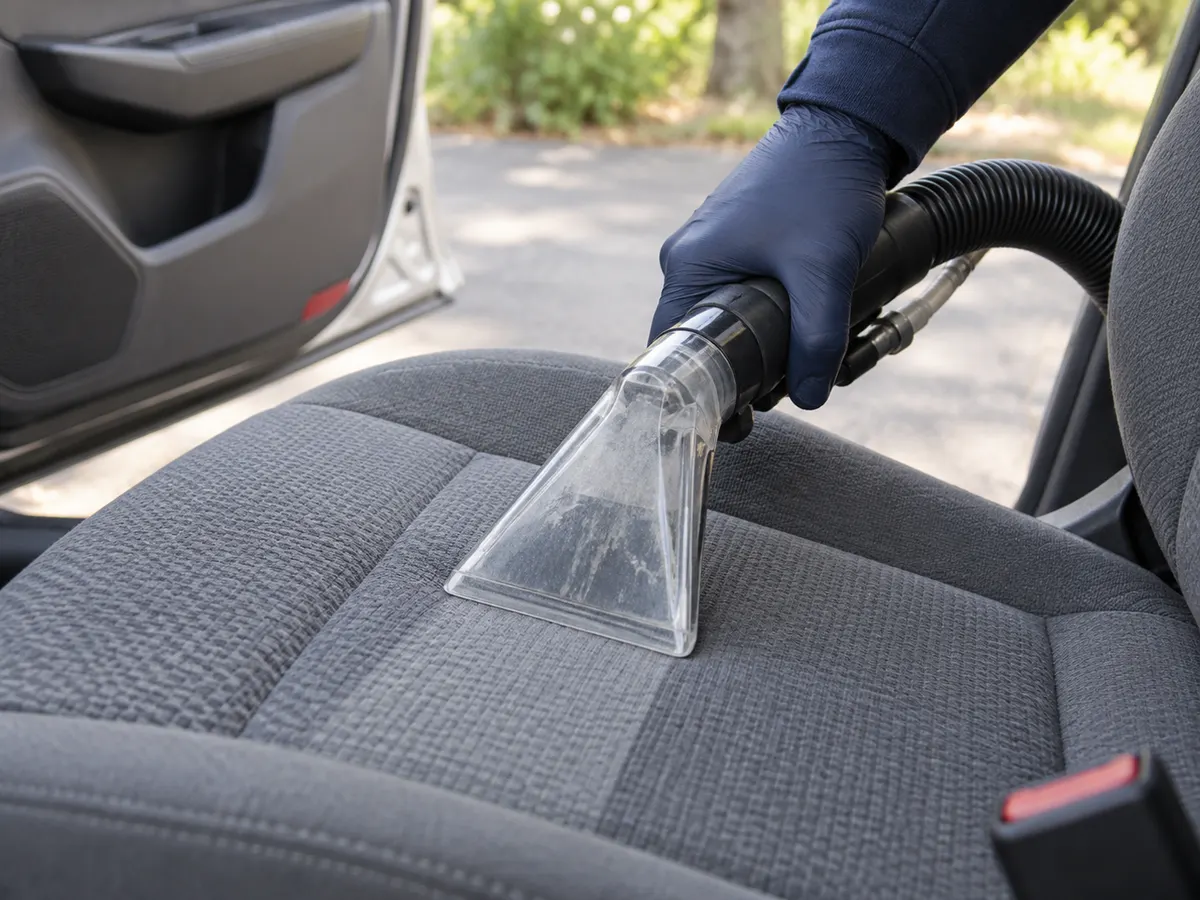
Look at the material and type of buildup
A vacuum lifts loose, dry debris from a surface. Some portable extractors apply a cleaning solution to upholstery and use suction to pull liquid back out. That illustrates the general distinction between the two approaches; it does not mean every machine or job works the same way. Tell us whether the concern is on a cloth seat, carpet, floor mat, or another upholstered area.
Share how widespread the issue is and whether it is limited to one spot or several parts of the cabin. If you know what caused a spill or when the material became damp, include that history. The team can use it to review the requested work before confirming the quote.
Separate extraction from a complete interior detail
Targeted extraction focuses on selected fabric or carpet areas. An interior detail has a broader cabin scope, including vacuuming, surface cleaning, steam treatment, minor-stain attention, leather care, and interior glass. Tell us if you want one area handled or want the wider cabin cleaned too.
The two requests can be discussed together, but the quote should state what work is included. Persistent odor, mold, heavy pet hair, or a stain with a complicated history may need a separate assessment rather than being assumed part of extraction.
Set expectations for the material
The condition of a fabric and the stain itself affect what can be proposed. Describe any previous spot treatment or cleaning you know about, and point out areas where you are concerned about the result. This gives the team a chance to discuss scope before work begins.
No quote description guarantees that every stain will disappear. If there is an ongoing leak or moisture issue, mention it; cleaning alone does not repair the source. The quote can then reflect the work being requested and any limits that should be clear.
Plan for service at home or work
The van brings water and power and can park in front of, behind, or beside the car. You do not need a driveway or dedicated parking lot. The location must allow safe, permitted access and enough room to open the vehicle doors freely.
Tell us the town, vehicle size, affected seats or carpets, and where the vehicle will be parked. Clear loose belongings and valuables from the area so the request can focus on the fabric surfaces you want reviewed.
Start with the soil, material, and result you want
Vacuuming lifts loose, dry debris from reachable surfaces. Upholstery extraction uses moisture and equipment on suitable fabrics after their condition is reviewed. The two services address different needs, and wet cleaning is not automatically better. Describe whether you see crumbs, pet hair, a liquid mark, or a general buildup, and identify the seat or carpet area involved.
Materials vary across cloth, leather, vinyl, perforated inserts, and aftermarket upholstery. Age, wear, repairs, and prior products also matter. Share the vehicle and what you know about the material, but do not try to diagnose its composition from a photo. The service method should fit the actual surface.
Recognize when vacuuming may be enough
If dust, crumbs, or leaves sit loosely on the surface, vacuuming may address much of the concern. Check the footwells, mats, seat seams, rear rows, and cargo area. A small amount of everyday debris does not automatically call for a wet treatment. If only one section needs attention, name it rather than assuming the entire cabin needs extraction.
Vacuuming alone will not wash away a spill or remove every set-in mark. Hair can remain tightly caught in carpet edges and stitching. Tell the team whether the issue is loose dirt, embedded hair, stain, or dampness. Those differences help the quote fit the request.
Describe stains and prior attempts
For a stain, identify the likely substance, location, age, and any product you tried. Coffee, oil, ink, food, and other materials can respond differently, and old marks may have altered the fabric. For a fresh liquid, gentle blotting with an absorbent cloth may limit spread; avoid rubbing or applying heat before getting guidance.
A photo can show size and location but cannot reveal what soaked underneath or whether the dye has changed. Mention dampness, stiffness, sticky residue, or a difference in texture. Tell the team about seat heaters, sensors, covers, or repairs so the proposed approach can account for vehicle features.
Ask how extraction and drying are handled
Extraction involves moisture, so ask what surfaces are included, how the material is evaluated, and what drying advice follows. Do not assume that extraction means soaking the upholstery or that every stain will disappear. A responsible service should discuss the condition and method before setting expectations.
Drying time varies with material, amount of moisture, weather, and ventilation. Follow the service provider’s aftercare guidance, and avoid covering damp seats with blankets or personal items. If an area remains unusually wet or develops an odor, contact the team instead of applying heat or another cleaner.
Set practical expectations for older marks and wear
Cleaning may improve many stains, but it cannot replace worn fabric, repair a tear, reverse fading, or guarantee removal of a chemical dye. A mark may lighten and remain visible. Ask what result is realistic for the specific seat and whether the material needs review before a service is quoted.
Disclose loose seams, exposed foam, peeling coating, previous repair, or damaged trim. A wet process may not suit unstable material. An upholstery repair professional may be needed instead. Keep cleaning, restoration, and repair as distinct tasks in the quote.
Separate pet hair, stains, and odor
Pet hair is a dry-removal concern and may need focused vacuuming or brushing before fabric cleaning. Extraction alone does not necessarily remove embedded strands. Mention the affected rows and whether hair is loose or caught in the fibers. If there is a stain or odor too, describe each issue separately.
Odor can come from moisture, residue, personal belongings, or a source outside upholstery. Do not assume extraction will resolve it. If dampness returns or you see suspected mold, share that history and ask whether a specialized assessment is needed. Some causes require another provider or repair before cleaning.
Prepare the cabin without pre-treating it
Remove loose belongings and valuables from the work areas and point out anything that must remain. Do not remove installed seats or safety restraints unless you can reinstall them correctly. If a mobility device or child seat cannot move, explain the limitation so the team can discuss reachable areas.
Avoid strong chemicals, powders, and household steam devices before the visit. Tell the detailer what you have tried and leave products identifiable. For mobile work, select a safe, permitted location with room to open doors. The van brings water and power, so a driveway or outlet is unnecessary.
Compare the service scopes before choosing
A vacuum request is narrow, interior detailing can include a broader set of cabin tasks, and upholstery extraction is a wet process for suitable fabric. Ask whether mats, seats, carpets, hard surfaces, glass, and spot work are included. If your priority is one area, check whether focused service is available.
Price can depend on vehicle size, material, condition, and included work. Ask how drying, hair, odor, and stain limitations are handled. Do not assume another vehicle’s quote applies to yours. A written scope helps you compare the proposed service with the actual concern.
Confirm scope, deposit, and appointment
Share the vehicle, affected areas, material concerns, prior treatments, and location when requesting a quote. The team follows up to clarify service and price; submitting the form does not reserve an appointment. Confirm the expected work and aftercare before accepting.
A deposit is required before an appointment is booked. Review the amount and terms and keep the confirmation. If new damage, moisture, or residue appears before the visit, tell the team so the plan can be reassessed.
Check seat features and installed equipment
Heated seats, ventilation, sensors, child restraints, and aftermarket covers can affect which cleaning methods are suitable. Mention those features and any seat repairs before extraction is quoted. Do not unplug or remove equipment to make cleaning easier; a qualified technician should handle components that require removal.
If a child seat or mobility aid must remain installed, identify the area beneath it and discuss what can be reached. The detailer can explain whether the item needs to be moved by its owner or whether the scope will exclude the blocked surface.
Understand why some stains remain visible
A spot may be a stain, dye transfer, wear, sun fading, or a reaction that changed the material. Cleaning can improve surface soil but cannot reverse every change in color or texture. Tell the team the likely source and whether the mark changed after earlier attempts. That context helps set a realistic outcome.
Ask whether a small test or material review is needed before wider work. A responsible provider may avoid aggressive treatment on uncertain fabric. If an area is torn, loose, or repaired, upholstery repair may be a better option than wet extraction.
Ask about mats and removable fabric items
Floor mats may be rubber, carpet, or a combination, and removable covers can have different care directions from fixed upholstery. Identify which mats, cargo liners, or seat covers you want included. Confirm whether removal, cleaning, and reinstallation are part of the service before leaving the vehicle.
Personal blankets, pet beds, and child-seat covers are not automatically part of vehicle detailing. Take them out or ask for a separate arrangement. Cleaning the car surface while leaving an odor-holding item in place may make it seem as though the service did not change the smell.
Plan for drying and vehicle availability
If extraction is selected, ask how long the vehicle should remain available and what drying conditions are recommended. Time varies with the fabric, amount of moisture, weather, and airflow. Do not schedule a tight handoff without understanding the provider’s guidance.
Arrange a safe place for the vehicle to remain after service and follow any instructions about windows, ventilation, and use. If material stays unusually damp or develops a new odor, contact the team rather than applying heat or another cleaner yourself.
Choose the right question for the service provider
Ask whether your concern is loose debris, embedded hair, a liquid spill, or a material issue. These conditions may call for different tools and moisture levels. Find out which seats, carpets, and mats are included, what remains outside scope, and whether material inspection is needed before extraction begins.
If a seat is especially valuable, repaired, or delicate, tell the team before the quote is finalized. Ask what method can be used and whether the expected improvement is worth the risk to that material. A provider should be able to explain when vacuuming is safer than a wet process.
Plan around drying and ventilation conditions
A cool, humid day and a warm, ventilated space can lead to different drying experiences. Ask the service provider what conditions it recommends after extraction and whether a garage or outdoor location is suitable. Do not assume that running heat or leaving windows open is always the right choice for every vehicle and weather condition.
Keep personal items off damp fabric until the provider says the area is ready. If the seats have built-in electronics or ventilation, follow vehicle guidance and do not use external heat devices. Contact the team if drying seems abnormal or a new odor appears.
Know when repair is more suitable than cleaning
A torn seam, broken foam, loose upholstery, failing dye, or peeling coating may need repair before cleaning. Wet extraction cannot restore structural support or replace damaged material. Photograph the condition and ask an upholstery professional or the detailing team whether a cleaning service is still appropriate.
If the surface is repaired later, ask the repair provider when cleaning products or moisture can be used. Follow the material-specific instructions. Separating cleaning from repair helps avoid worsening a defect and keeps expectations clear.
What to remember
- Vacuuming and targeted fabric extraction describe different scopes.
- Identify the material, affected area, spill, and prior treatment.
- Ask whether you also want a broader interior detail.
- The quote should reflect the condition and work discussed.