
Engine-Bay & Rodent Cleanup
Rodent Signs in a Car: Detailing Limits and When to Call a Mechanic
Finding nesting material, droppings, an unfamiliar odor, or signs of chewing under the hood can raise two different questions: what visible contamination can a detailer address, and does the vehicle need mechanical inspection or repair? Those questions should not be collapsed into one appointment. This guide explains the current Boston Mobile Car Detailing rodent-cleanup limits, which details help prepare a quote, when a mechanic belongs in the plan, and why cleaning cannot promise access to concealed areas or prevent rodents from returning.
Begin by separating cleanup from vehicle diagnosis
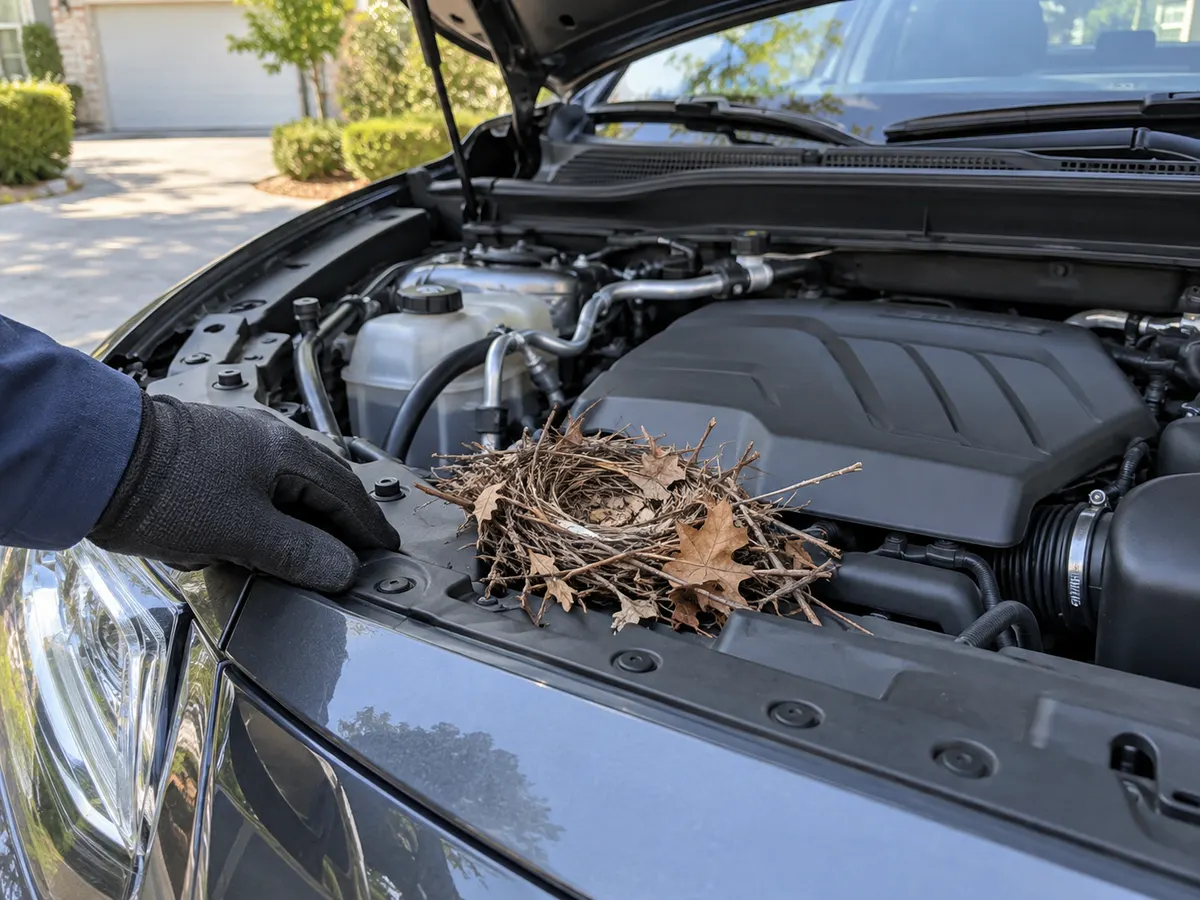
The current engine-bay rat and mouse cleanup page describes a specialty detailing assessment for visible condition, contamination, safe access, and agreed reachable areas. It does not present the service as a mechanical inspection. A detailer can review visible nesting material, droppings, waste, odor, and affected accessible surfaces for a cleanup quote. A detailer cannot determine whether wiring, hoses, sensors, insulation, or other vehicle systems are functioning correctly.
That distinction matters from the first contact. If the main concern is debris or waste that appears reachable, describe the cleanup request. If the vehicle has a warning light, starting problem, visible wire damage, damaged hose, unusual operation, or another mechanical symptom, arrange an appropriate mechanic’s evaluation. One vehicle may need both services, but each provider should work within a clearly defined role rather than treating cleaning as proof that the vehicle is mechanically sound.
Leave visible contamination undisturbed while you document it
Boston Mobile Car Detailing’s live guidance asks customers to leave visible contamination undisturbed while requesting a quote. It also advises against touching or disturbing rodent waste or nesting material and says not to dry-sweep or vacuum untreated droppings, urine, or nesting debris. You do not need to move a nest, lift covers, reach behind components, or clear a path to show that a concern exists.
From a safe distance, note what you can see without manipulating the engine bay. Record whether the material looks like leaves, paper, fabric, insulation, food, droppings, or another visible sign. Identify its general location, but do not guess what lies underneath. If you can take a useful photo without reaching into the compartment, include a wide view for orientation and a closer view of the affected area. Photos help describe the request; they do not establish hidden condition or mechanical safety.
Build a simple timeline of what you noticed
Tell the team when you first noticed the sign and what led you to look. An odor may have appeared before visible debris. A warning light may have come on after the vehicle sat for several days. You may have seen material on one morning and found more later. A timeline helps separate a single observation from continuing activity, although it does not by itself identify the animal, entry point, or extent of contamination.
Include any recent repair, inspection, pest-control visit, or prior cleanup. State whether anyone removed material, vacuumed, sprayed a product, replaced a part, or moved an engine cover. Do not present a previous treatment as proof that the problem is resolved. The information helps Boston Mobile Car Detailing understand what has already changed and which visible areas may still be appropriate for assessment.
Describe the exact area instead of saying only “under the hood”
An engine bay contains open visible surfaces, tight gaps, covers, air-intake areas, wiring paths, and spaces behind components. The quote needs a location description that is as specific as you can make safely. Say whether the visible material is near the upper edge of the bay, around an accessible cover, beside the battery area, near insulation, close to an intake opening, or spread across several reachable sections.
Avoid implying that a visible nest defines the full extent of the problem. Material at the top of the engine bay may continue into a concealed space, or the visible debris may be the only accessible portion. Boston Mobile Car Detailing confirms the cleanup scope according to condition and access. If reaching the suspected area would require removing a cover, panel, fastener, bolt, nut, hose, or other part, that area sits outside the published detailing limit.
Know what accessible rodent cleanup may cover
The live rodent-cleanup page says the team reviews visible activity and reachable areas, then agrees on a vehicle-specific quote for accessible nesting material, waste, and affected surfaces. The approved scope varies with the amount of material, its location, the extent of the affected engine bay, and whether cleanup can be completed without removing parts. That is a condition-based service, not a universal list promising the same treatment for every vehicle.
Read the quote for the actual surfaces and debris included. Ask whether the request covers one reachable area or several, and whether cabin or air-intake concerns are excluded. Do not infer that every smell, dropping, or fragment has been reached simply because visible material was cleaned. Sealed, concealed, and inaccessible spaces are outside the promise, and the service does not guarantee complete odor elimination when a source may remain beyond reach.
Understand the no-disassembly boundary
The rodent page and the routine engine-bay page use the same essential access boundary: Boston Mobile Car Detailing removes no parts, bolts, or nuts to reach hidden areas. Areas that cannot be accessed without disassembly cannot be cleaned through this detailing service. This protects the difference between accessible surface work and mechanical or specialty work that requires opening, removing, or reinstalling vehicle components.
Do not remove parts yourself solely to convert a hidden concern into a detailing request. An exposed component may be delicate, damaged, connected to a safety system, or subject to specific service procedures. If a mechanic needs to remove a part to inspect or repair the vehicle, coordinate the order of work with the appropriate providers. The detailing quote should stay limited to what the team can safely reach under its published service rules.
Call a mechanic when wiring or hoses look damaged
The live cleanup page specifically directs chewed wiring and damaged hoses to a mechanic’s inspection. A detailer may be able to see that a wire covering looks disturbed or a hose appears marked, but cleaning does not diagnose the component, test the circuit, repair the damage, or confirm that the vehicle is safe to operate. Photograph the visible concern from a safe distance and describe it when contacting the mechanic.
Do not ask the cleanup crew to tape a wire, reconnect a part, clear a fault, or decide whether damage is cosmetic. Those requests are mechanical work. After the mechanic evaluates and addresses the vehicle, tell Boston Mobile Car Detailing what was repaired and whether any accessible contamination remains. A repair invoice and a cleanup quote solve different problems, even when both began with the same rodent activity.
Warning lights and starting trouble belong with a mechanic
A warning light, trouble starting, unexpected electrical behavior, or another change in vehicle operation can indicate a mechanical or electrical issue that detailing cannot diagnose. The current rodent-cleanup page explicitly names warning lights and starting problems as reasons to arrange a mechanic’s inspection. Report what you observed, when it began, and whether it appeared before or after the visible rodent signs.
A cleanup appointment should not be used as a test of whether the symptom will disappear. Removing reachable debris does not read diagnostic codes, test wiring, inspect hidden components, or establish roadworthiness. Let a qualified mechanic decide what inspection and repair are appropriate. If the vehicle later receives detailing, provide an updated description so the team understands which mechanical issues were handled and which accessible cleanup concerns remain.
Cabin or air-intake concerns need separate attention
Tell the team if droppings, debris, or odor may involve the cabin, cowl, ventilation path, air-intake area, filter housing, trunk, or another section outside the visible engine bay. The live service page asks customers to disclose whether the cabin or air intake may be affected. It also says extensive contamination or a concern involving an air intake, cabin, concealed space, or access behind parts may require another appropriate remediation specialist or mechanic.
Do not assume that an engine-bay quote includes opening ventilation components or cleaning the passenger compartment. An odor entering the cabin can have more than one possible source, and accessible surface cleaning cannot confirm that an enclosed system is clear. Describe where the smell is strongest and when it appears, but avoid promising yourself that one engine-bay visit will resolve it. The team can explain which part, if any, fits its detailing scope.
Routine engine-bay detailing is a different request
Routine engine-bay detailing focuses on suitable accessible surfaces with ordinary dirt or buildup. The live engine-bay page says there is no parts removal, no mechanical diagnosis, and no repair. When nesting material, droppings, urine, or a rodent-related odor is present, the site directs customers to request rodent cleanup instead so contamination receives a separate assessment and quote.
Do not choose routine engine-bay detailing simply because it sounds smaller or easier. The service name should match the condition being reported. Likewise, a rodent-cleanup request does not automatically include a complete cosmetic engine-bay detail. Tell the team if both visible contamination and general surface buildup matter, then ask how the approved quote separates the specialty cleanup from any additional routine work.
Pest control addresses recurrence and entry points
Engine-bay cleaning cannot prevent rodents from returning. The live rodent page states that an active infestation or entry point may need separate pest-control attention. A detailer does not trap animals, seal a building, manage a property-wide infestation, or guarantee future prevention. If you continue to find new signs after the vehicle or parking area was addressed, discuss the broader activity with an appropriate pest-control provider.
Share where the vehicle is normally parked and whether signs appear in a garage, driveway, lot, or nearby storage area, but do not expect the detailing visit to evaluate the property. Mechanical repair, pest control, and accessible cleanup can all be relevant without being interchangeable. A useful plan assigns the damaged vehicle systems to a mechanic, the active infestation or entry problem to pest control, and the agreed reachable contamination to the detailer.
Odor improvement depends on source and access
A urine-like or unfamiliar odor is one of the signs the live page asks customers to describe, including whether it seems limited to the engine bay or reaches the cabin. Odor can help identify where to look, but it does not establish the full source. Contamination may be visible and reachable, or it may remain behind a component or within an enclosed path that detailing cannot access.
For that reason, Boston Mobile Car Detailing does not promise that every odor will be eliminated. Ask the quote to identify the reachable material and surfaces being addressed rather than relying on a general expectation that the smell will disappear. If odor persists after accessible cleanup, report when and where it remains. The next step may require a mechanic or another appropriate provider, particularly when the suspected source is concealed or connected to the cabin or intake system.
Plan the mobile location and access before scheduling
The published process requires a safe, permitted place for the mobile van near the vehicle, with the relevant access details agreed in advance. Share the city or town, whether the vehicle is at home, work, a garage, or a shared property, and any building or parking rules. Property permission may be required, and the quote form by itself does not reserve an appointment.
Also explain whether the hood opens normally and whether another vehicle, wall, low ceiling, stored object, or parking restriction limits access around the front of the car. Do not relocate a vehicle in a way that conflicts with a mechanic’s advice or property rules merely to create a detailing space. The team will confirm whether the proposed location is suitable for the agreed reachable-area assessment.
Review the quote for inclusions and exclusions
A useful rodent-cleanup quote should identify the vehicle, visible condition, accessible affected areas, planned cleanup boundary, service location, and price. It should also make the exclusions understandable: no disassembly, no repair, no mechanical diagnosis, no promise to reach concealed spaces, no pest control, and no guarantee that every odor will disappear or that rodents will not return.
Compare the quote with the information you supplied. If you reported a possible cabin or intake concern, ask whether it is included, excluded, or referred. If the mechanic later finds damage or removes a part, update the detailer before the visit because access and condition may have changed. Request approval of any revised work and price rather than assuming that newly discovered material is automatically part of the original scope.
Use a two-provider checklist when both cleanup and repair may be needed
For the mechanic, report warning lights, starting trouble, visible wire or hose damage, unusual operation, and the location of suspected activity. For Boston Mobile Car Detailing, report the visible nest, droppings, waste, odor, reachable surfaces, cabin or intake concerns, previous cleanup attempts, service city or town, and parking access. Send each provider the facts relevant to its role instead of asking either one to cover the entire problem.
Then confirm the order of work. A mechanic may need to inspect first when vehicle systems or hidden components are involved; accessible cleanup may be planned before or after repair depending on condition and provider guidance. Keep the scopes separate in writing. The goal is not to turn a rodent concern into the largest possible job. It is to avoid mistaking surface cleanup for mechanical clearance, or mechanical repair for contamination cleanup.
What to remember
- Leave visible rodent debris undisturbed while documenting it from a safe distance.
- Use the cleanup service for agreed visible, reachable contamination—not hidden areas or disassembly.
- Arrange a mechanic’s inspection for chewed wiring, damaged hoses, warning lights, starting trouble, or other operational concerns.
- Treat cabin, air-intake, concealed-area, and active-infestation concerns as separate scope questions.
- Review the quote for access limits, exclusions, location, price, and realistic odor expectations before booking.