
Car Odor Removal
Why Can a Car Odor Return After It Has Been Masked?
Masking an odor with fragrance changes the smell temporarily; it does not remove a spill or residue causing it. As the added fragrance fades, the original odor may become noticeable again. Describe where and when it returns so the affected area can be reviewed.
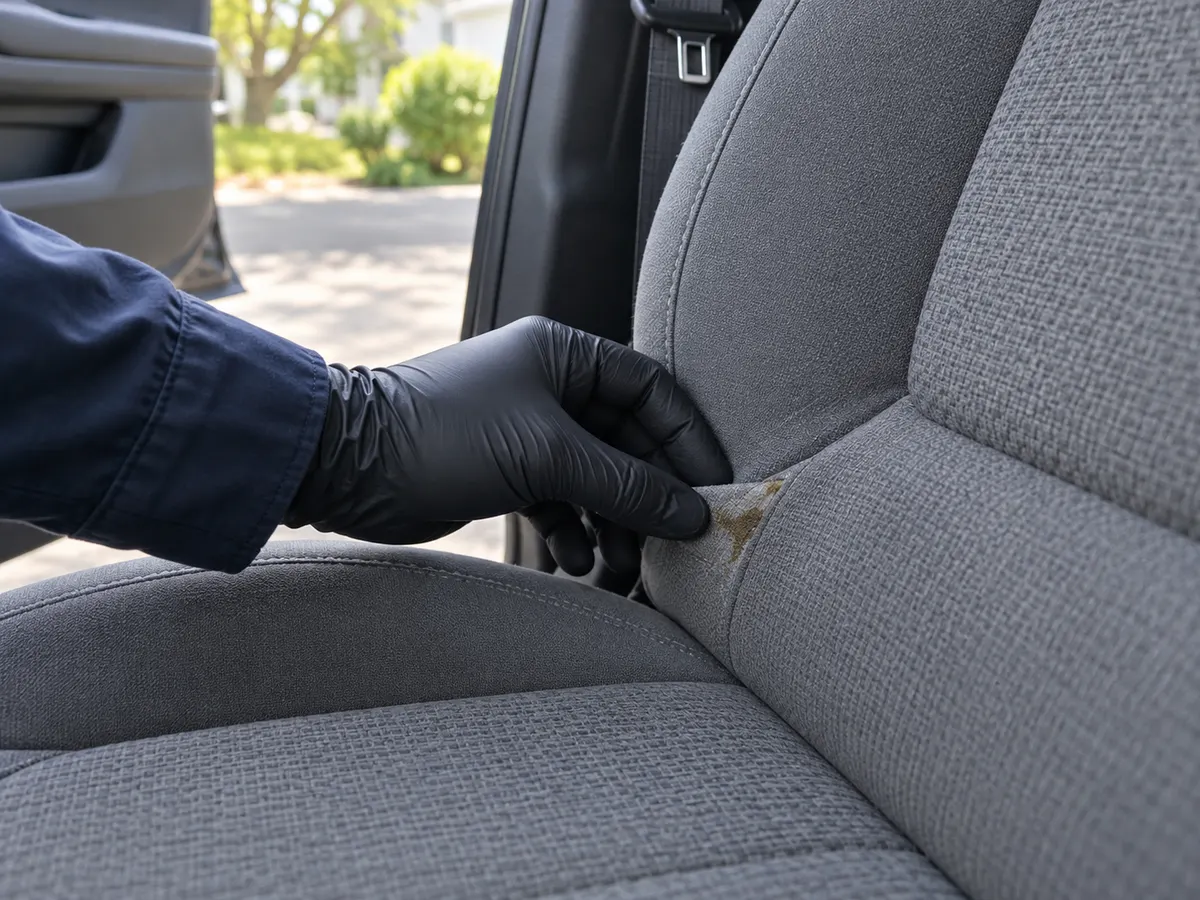
Describe the odor rather than naming a treatment
A fragrance or deodorizing scent can cover an odor without removing the spill, residue, or other source underneath. When the added scent wears off, the original smell can return. This is why a short-lived change in scent is not the same as addressing the source.
Tell us whether the smell is strongest in one seat, the carpet, the cargo area, or throughout the cabin. Mention when you notice it, such as after the vehicle has been parked or when you first get in. Share any known spill, dampness, pet-related incident, or previous cleaning attempt; you do not need to diagnose the source.
Consider whether another service needs review
Odor concerns can overlap with upholstery stains, moisture, pet hair, mold, or other interior buildup. Mention visible marks or affected materials along with the smell. If you suspect mold or the cabin has been wet, explain that history so the request can be assessed for the appropriate service.
A general interior detail and targeted odor removal are not always the same request. The quote should identify the areas and treatment being discussed. Do not assume that masking, routine vacuuming, or one service description automatically covers every possible source.
Keep expectations tied to the confirmed scope
The vehicle’s condition and the areas affected inform the proposed work. Some concerns may need additional assessment or a separate service. The team can explain the scope and any limitations before arranging an appointment, based on the information available.
No description can guarantee that an odor will be eliminated permanently or that an unknown source has been found. If the smell may reflect a mechanical problem or another issue beyond detailing, raise that concern separately for the appropriate professional.
Prepare the mobile visit details
Share the vehicle type, town, odor location, and relevant spill or moisture history in your quote request. The van brings water and power and can park in front of, behind, or beside the car. A driveway is not required, but access must be safe, permitted, and allow the doors to open freely.
For an apartment, workplace, garage, or street space, mention restrictions before an appointment is arranged. The team confirms the quote and scope first; sending the request does not book a visit automatically.
Fragrance can cover an odor without removing its source
An air freshener may change the cabin smell for a while, but it does not necessarily remove residue, moisture, or another source. The original odor can return when fragrance fades or the car warms up. Describe the odor and its history rather than asking only for a stronger scent. Tell the team where it seems strongest and whether weather or ventilation changes it.
Odor is a clue rather than a diagnosis. Mustiness, smoke, food, pet accidents, fuel, and mechanical odors call for different responses. If you smell gasoline, burning, or exhaust, seek qualified mechanical help and do not treat it as an ordinary detailing request. A detailer can review an interior-cleaning scope but cannot certify mechanical safety.
Notice when and where the smell occurs
Consider when the odor began and what was happening: a spill, wet shoes, pet travel, smoke, food, or water after rain. Note whether it is strongest by a seat, floor mat, cargo area, or vent. These observations help the team discuss relevant surfaces without asking you to identify a chemical source.
Notice whether it appears all the time or only when heat, air conditioning, or a fan runs. A smell tied to ventilation may need attention beyond surface detailing. Do not spray fragrance into vents or disassemble parts while investigating. If the odor comes with a warning light, smoke, burning, or fluid, prioritize a mechanic.
Remove accessible sources before the visit
Identify visible spills or food residue, the material involved, and any products already used. Liquids can travel under mats or into seams, so a clean-looking top layer may not show the full extent. Avoid rubbing hard or saturating fabric with household cleaner; that can spread residue or create another odor.
Check trash, reusable containers, floor mats, child-seat covers, and cargo items. Remove personal belongings where possible and point out anything that must remain. A detailing service can address only the vehicle surfaces in the agreed scope; personal items are not included unless arranged separately.
Treat moisture as a separate problem
Damp carpet, wet seat padding, condensation, or water after rain can sustain a musty smell. If the same area gets wet again, a leak may need repair. Detailing does not repair seals, drains, glass, or body components. Share the moisture pattern and arrange an automotive inspection when water continues to enter.
Do not cover a persistent damp smell with fragrance or assume that a dry top surface means the material beneath it is dry. Avoid heat devices and unapproved chemicals. Suspected mold or extensive flooding needs an individual assessment; do not disturb it. Some concerns may extend beyond ordinary interior cleaning.
Set realistic expectations for odor treatment
Cleaning can improve an odor when its source is on suitable accessible surfaces, but no process guarantees that every smell will disappear permanently. Results depend on age, material, spread, prior treatment, and whether the source is corrected. Ask which areas and steps are included and what uncertainty remains.
Odor treatment is not a substitute for mechanical diagnosis, leak repair, hazardous-material handling, or cleaning of personal belongings. If a specialty method is proposed, ask what it targets and what it does not. A written scope gives you a practical basis for choosing.
Keep a record of products you have tried
List fragrance sprays, household cleaners, powders, wet-vacuum attempts, or prior professional treatments. Note approximate timing and surfaces. This can explain why the smell changed temporarily and helps prevent repeating an ineffective approach. Tell the team even if a product did not work as expected.
Keep the product label or a photo of its name and ingredients if available. Do not mix cleaners or add chemicals while waiting for advice. Some products can discolor materials or leave a second scent. If you do not know what was used, say so rather than guessing.
Prepare the cabin and mobile work location
Remove loose trash and belongings from the affected area, but leave installed components in place. Point out the strongest-smelling location and items that cannot be moved. Select a safe permitted spot with room to open doors. The mobile van brings water and power; you do not need to provide a driveway or outlet.
Apartment garages, workplaces, and shared lots may have access rules. Check them and share gate instructions, height limits, and any ventilation restrictions. If the smell may be hazardous or mechanical, explain that before scheduling and follow professional advice.
Ask what the quoted treatment includes
Ask which surfaces the service will address, whether extraction is proposed, and what condition would cause the team to pause. Confirm whether the odor source must be removed or repaired first. If the quote uses a phrase like “odor treatment,” ask what it means in plain terms and what outcome is reasonable.
Pricing can depend on vehicle size, condition, and included work. A broad assurance that the cabin will smell new is not a useful scope. Compare the written tasks, limitations, and any required preparation before agreeing.
Understand when a visit is booked
A website request is not a reservation. The team reviews your notes and follows up about service, price, and location. If the odor changes or a leak appears while you wait, update the team so the proposal can be reviewed.
A deposit is required before an appointment is booked. Review its amount, cancellation terms, and confirmed scope before payment, then retain the confirmation. Cleaning, masking, and source repair are different tasks; keeping them distinct helps you choose the right service.
Consider whether the source is inside or outside the cabin
Some odors come from residue on carpet or upholstery, while others may come from a cabin filter, ventilation system, engine issue, or an item stored in the car. Notice whether the odor is strongest with the fan on, after rain, or near a specific surface. Those clues help decide whether detailing is the right first conversation.
A burning, fuel, exhaust, or electrical smell should be treated as a possible mechanical concern. Stop relying on fragrance and ask a qualified technician to inspect the vehicle. A detailing service can clean suitable interior surfaces, but it cannot determine whether the source is safe.
Check personal items and removable mats
Reusable cups, food containers, sports gear, pet bedding, floor mats, and cargo items can hold odors after the car surfaces have been cleaned. Remove loose items and assess them separately. Tell the team if a removable mat or liner is part of the requested work, because belongings are not automatically included in vehicle detailing.
If the odor returns after the cabin is cleaned, note where it starts and whether any item came back into the car. This does not prove the cause, but it narrows the next discussion. Avoid placing damp items in the vehicle and allow surfaces to dry as directed.
Ventilation and filters may need separate service
A smell that appears only when the fan or air conditioning runs may involve the ventilation system or cabin filter. Surface cleaning may not reach those parts. Describe the pattern and ask an automotive technician whether inspection or filter service is appropriate before requesting interior odor treatment.
Do not spray products into vents or remove components unless the vehicle maker or a qualified professional directs you. A detailing quote should say whether ventilation cleaning is included or outside scope. Clear expectations prevent a surface detail from being mistaken for HVAC diagnosis.
Keep aftercare aligned with the material
After a cleaning service, follow the provider’s directions for drying and ventilation. Keep windows or doors positioned only as recommended, considering weather and vehicle security. Avoid immediately applying fragrance or another cleaner; doing so can mask whether the original concern changed and may add residue.
If a smell remains, record when it occurs and contact the team with the location and conditions. A remaining odor may mean the source is outside the treated area or needs repair. Do not assume that repeating the same treatment will address a different source.
Choose a goal you can evaluate
Before booking, decide what change matters: reduce a smell in a particular seat area, clean a visible spill, address a musty carpet, or inspect a ventilation-related odor. “Make it smell new” can mean different things and may be impossible to guarantee if the source is hidden. A specific goal lets the quote state which surface or condition is being addressed.
Ask how the provider will describe a successful result and what might remain. Some odor improvement is noticeable only after the cabin dries or after the car has been driven. Avoid judging with a fresh fragrance masking the original smell. A clear, practical expectation is easier to discuss than an absolute promise.
Do not use multiple treatments at once
Adding fragrance, powder, household cleaner, and another treatment in quick succession can create overlapping residues and make it difficult to tell what changed. Pause experimentation and report what has already been used. Follow the vehicle manufacturer’s directions and the advice of a qualified professional when a treatment involves ventilation or electrical systems.
If a product has a strong smell or causes a surface reaction, identify it to the provider. Do not mix it with a different cleaner. More product does not necessarily mean more effective cleaning and can create a second issue that must be addressed separately.
Reassess if the odor returns after cleaning
If the smell returns, note the timing, location, weather, and whether the fan or air conditioning is running. Check whether dampness or a personal item could be involved, without dismantling the car. Share the pattern with the detailer or mechanic based on the likely source.
A returning odor does not automatically mean the same surface needs a repeat treatment. The source may be in an uncleaned area, a filter, a leak, or an item removed after the service. Ask for a review of the original scope and decide whether another professional should inspect the vehicle.
What to remember
- Say where and when the odor is noticeable.
- Mention spills, dampness, pets, and prior treatment you know about.
- Flag visible mold or mechanical concerns separately.
- Rely on the confirmed scope, not an assumed permanent result.