
Mobile Detailing Visits
Which Car Detailing Service Do You Need? A Boston Driver’s Guide
Not every car needs the same kind of detailing. One driver may want crumbs and everyday buildup cleaned from the cabin; another may be concerned about pet hair, an upholstery spill, a lingering odor, tree sap, or signs of rodents. This guide explains how to describe what you see, compare service types, and request a quote for mobile car detailing in Boston and nearby communities. The goal is to help you start with the right conversation, not to diagnose a problem from a distance or promise a result before the vehicle is assessed.
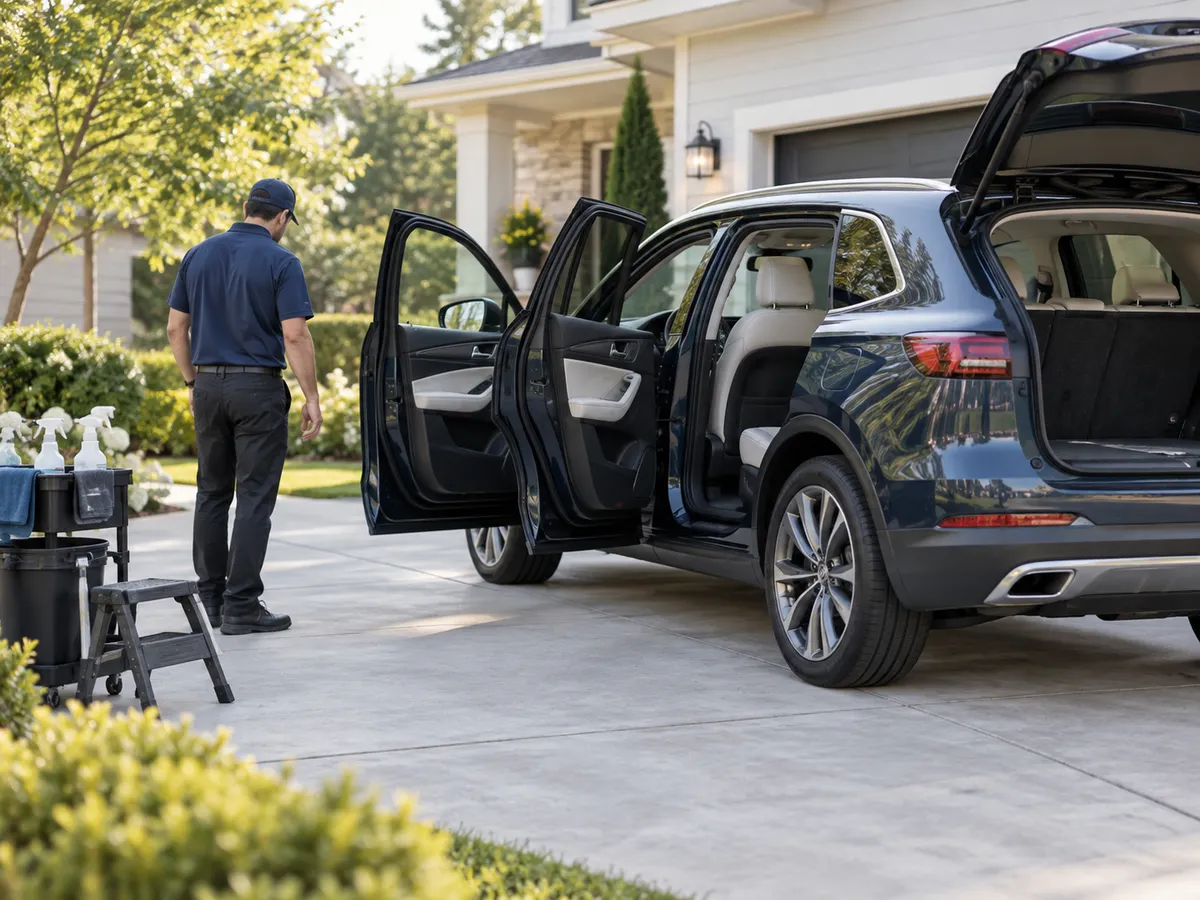
Start with the result you want from the vehicle
Before choosing a service name, decide what you want to be different when the work is done. Perhaps the cabin feels dusty, the seats need attention, the exterior has road film, or one specific area has a spill. Write down the two or three most important concerns. A short list helps keep the quote focused and makes it easier to confirm that the requested work matches your priorities.
Then note where each concern appears. “The rear seat has a juice spill” is more useful than “the interior is dirty.” “There are small sticky spots on the hood” gives a detailer a better starting point than “fix the paint.” You do not need to know the technical name for a mark or material. Describe its location, size, age if known, and what you have already tried. The team can ask follow-up questions before recommending a scope.
Choose interior detailing for everyday cabin cleaning
Interior car detailing is generally the right place to start when the main goal is a more comfortable, cleaner cabin. Depending on the confirmed scope and the vehicle’s condition, routine interior care may address reachable surfaces, seats, carpets, mats, crevices, and interior glass. Vacuuming and surface cleaning are different tasks, and the areas that need the most time can vary between a commuter sedan, a family SUV, and a vehicle used for work.
Think about how the car is used: school runs can leave crumbs in seat seams, commuting can build dust around the console, and regular passengers may affect rear seating and floor mats. Tell the team which spaces matter most and whether you want the whole cabin considered. If a separate concern such as embedded pet hair, odor, mold, or a fabric spill is present, mention it before the quote. A routine interior detail should not be assumed to include every specialty treatment.
Consider a full detail when both cabin and exterior need care
A full detail can be a useful conversation when you want interior cleaning and exterior attention planned together. It can include cabin work alongside an exterior hand wash, wheel and tire cleaning, and an appropriate finishing step, with the exact scope confirmed for the vehicle. If only one side of the car needs attention, ask whether an interior-only or exterior-only service is a better match for your priorities.
Describe the vehicle’s current condition rather than relying on a package name to explain everything. Mention heavy interior buildup, delicate materials, paint concerns, or areas you would like the team to inspect. A full detail is still detailing; paint correction, deep mold remediation, and other specialty services may need a separate assessment. Confirm the included steps and any exclusions before arranging a visit so expectations are clear.
Use exterior detailing for routine washing and finish care
Exterior detailing is a fit when the main goal is cleaning and caring for the outside of the vehicle. The work can address the body, wheels, tires, glass, and accessible jambs according to the quoted service. Road film, pollen, seasonal grime, and everyday dirt are common reasons drivers request exterior care. Share whether your car has a wrap, matte finish, coating, or other special surface that should be considered before treatment.
If paint feels rough or has stuck-on contamination, ask whether clay-bar decontamination is appropriate. If you notice swirls or dullness and want to improve the finish, discuss paint correction separately; polishing changes the paint surface and needs a condition review. Exterior washing does not automatically correct scratches, remove every deposit, or provide long-term protection. The detailer should explain the planned steps and likely limits for the finish being treated.
Name the specific concern when the request is not routine
Some conditions are easier to review when they are described as a separate service request. Embedded pet hair can take additional time and vary by carpet or upholstery type. Fabric seats or mats affected by a spill may need upholstery extraction, with treatment chosen based on the material and the nature of the stain. Tell the team whether the concern is one spot or multiple areas, and whether the fabric has been treated before.
A persistent smell may call for car odor removal rather than fragrance or routine interior cleaning. Describe the odor in neutral terms, when it started, and whether it changes when the vehicle warms up or the ventilation runs. Visible mold or a history of water intrusion deserves its own conversation. Boston Mobile Car Detailing recommends in-shop remediation for more thorough mold concerns; mobile work is limited to accessible, surface-level cleaning and water extraction. The appropriate plan depends on assessment, and no stain, odor, or mold result should be guaranteed before review.
Understand engine-bay and paint-specific requests
Routine engine-bay detailing is for accessible surfaces and cosmetic cleaning. It is not mechanical diagnosis, repair, or disassembly. If you want the engine area cleaned, describe what you see and whether there are sensitive components, modifications, or a reason you are concerned about the bay. Do not attempt to clean an unknown leak or mechanical issue as if it were simply a detailing problem.
If you suspect rodents have been in the engine area, say so directly and identify any visible nesting material, droppings, odor, or damage. Rodent cleanup is a specialty concern and is different from routine engine-bay detailing. Share whether the car has been driven since you noticed it and whether a mechanic has inspected possible wiring damage. Detailing can address approved accessible cleaning work, but it does not substitute for a mechanical inspection or guarantee removal from hidden areas.
Tell us about sap, rough paint, and other isolated areas
A small, isolated exterior issue may not require a full exterior package, but it still needs a suitable assessment. For tree sap, note which panels are affected, how long it may have been present, and whether you tried to scrape or dissolve it. Different finishes react differently, and hardened deposits can be more involved than fresh residue. Avoid picking at paint with a blade or abrasive household product while waiting for guidance.
For rough-feeling paint, explain whether it is on one panel or across the vehicle and whether the car has a coating or wrap. Clay-bar decontamination can remove certain bonded contaminants, while polishing is a separate paint-care process. The surface and desired result should be reviewed before choosing a treatment. A photo can help explain the concern, but it may not reveal the full condition or determine a final quote on its own.
Choose maintenance visits based on use and condition
Maintenance detailing can help keep a vehicle in a manageable condition after a more complete service. The right cadence depends on how often the vehicle is driven, where it is parked, who rides in it, and what level of cleanliness feels comfortable. A family car with frequent passengers may need attention sooner than a weekend vehicle. Boston weather, pollen, road salt, and outdoor parking can also influence what accumulates.
Maintenance plans are available monthly, every 6 weeks, or every 2 months, with a 2-month commitment. Savings are up to 40% and vary by visit frequency. Ask which package is included, what the exact discount is for your chosen schedule, and how changes in vehicle condition affect the visit. Specialty work such as mold remediation, odor treatment, or paint correction should be discussed separately rather than presumed part of routine maintenance.
Prepare useful details for a mobile detailing quote
Share your first and last name, a reliable phone number, your town or area, vehicle type, the service you are considering, and the concerns you would like reviewed. The form’s “What can we help with?” selection identifies the service interest, while the notes field can explain stains, pet hair, moisture, odor, sap, or other details. Specific information gives the team a better basis for responding than a one-word request.
Also explain where the vehicle will be parked and whether the location has restrictions. The mobile setup brings water and power, but the van still needs safe, permitted access close to the car and room to work. Check with a property manager or lot operator when needed. Remove personal belongings and valuables from the areas to be cleaned, and point out anything that should stay in the vehicle.
Know what happens after the quote request
Submitting the form starts a conversation; it does not automatically book an appointment. The team reviews the vehicle, location, service interest, and any special conditions, then follows up to confirm the scope, quote, and next steps. If the assessment suggests a different service, ask why and compare the recommended work with your original request before deciding.
A deposit is required before an appointment is booked. Review the amount and applicable cancellation terms when those details are provided, and wait for confirmation before treating the date as reserved. If the vehicle’s condition or location changes before the visit, update the team so the planned work and access arrangements can be reviewed again.
Mobile detailing around Boston and Greater Boston
Boston Mobile Car Detailing provides mobile service in Boston and nearby communities including Somerville, Cambridge, Medford, Melrose, Arlington, Malden, Brookline, Chelsea, and Watertown. Share the actual town or neighborhood when you ask for a quote. Coverage and parking access should be confirmed for the specific address; a list of service areas does not mean every street or property has the same rules.
For apartments, garages, workplaces, and shared lots, check whether detailing is allowed and describe gate procedures, height limits, time windows, or loading rules. If safe access is not available, the team can discuss alternatives before arranging the appointment. Clear logistics help keep a mobile visit practical for both the customer and the crew.
A simple way to make the right choice
Match the service to the main problem: interior detailing for everyday cabin cleaning; exterior detailing for routine outside care; full detailing when both areas are priorities; and a specialty conversation for concerns such as odor, mold, pet hair, upholstery extraction, sap, paint correction, clay treatment, or suspected rodents. The service pages explain each option in more detail, and a quote request lets the team review the actual vehicle and location.
You do not have to diagnose the vehicle or select the perfect label before reaching out. Describe what you notice, where it is, what you want improved, and any relevant history. Ask what is included, what is separate, and what results are realistic. That practical conversation is a better start than choosing a service based only on a keyword or assuming that every package covers every concern.
What to remember
- Choose the service by the areas and results that matter to you.
- Describe specialty concerns separately from routine cleaning.
- Confirm scope, access, quote, deposit, and appointment terms before booking.
- Use the service pages to compare options and request a vehicle-specific quote.