
Exterior Car Detailing
Exterior Car Care in Colder Weather: Salt Film, Safe Access, and Realistic Maintenance
Colder weather changes what a useful exterior-care request looks like. A vehicle may carry road film across its lower panels, buildup around the wheels, residue near jambs, or a mix of ordinary grime and older finish defects. At the same time, the location must remain safe and permitted for a mobile visit. This guide explains how to describe the vehicle, separate cleaning from correction, prepare a workable parking plan, and set realistic maintenance expectations with Boston Mobile Car Detailing. It relies on the current service pages rather than promising a fixed result from one visit.
Start with the condition you can see, not the season alone
“Winter dirty” can mean several different things. One car may have a thin gray film across the doors and rear bumper. Another may show heavier buildup behind the wheels, gritty lower panels, marked glass, or residue around the fuel door and jambs. A vehicle parked outdoors every day can present a different job from one that spends most of its time in a garage. Begin your request with the visible areas and how the car is used instead of assuming that a colder month automatically defines the service.
Walk around the car in ordinary daylight when the surface is safe to inspect. Note where the film is heaviest, whether the wheels have visible buildup, and whether glass or trim needs attention. Separate broad grime from isolated concerns such as tree sap, water spots, paint transfer, a scratch, or a rough-feeling section. You do not need to diagnose the finish. A short, location-based description gives the team more useful information than labels such as “salt-covered” or “needs everything.”
Understand what the current exterior service is designed to address
The live exterior detailing page lists a hand wash for everyday dirt and road film, wheel and tire cleaning with tire dressing, and cleaning of accessible door jambs, the trunk jamb, and the fuel-door area. It also lists clay-bar paint decontamination and a ceramic paint sealant when those steps are suitable for the vehicle’s finish. That makes exterior detailing broader than a quick rinse, but the exact work still depends on the vehicle, finish, condition, and confirmed quote.
These inclusions are useful reference points, not a promise that every surface will look new or that every vehicle will receive identical treatment. Heavy buildup, bonded contamination, delicate finishes, existing coatings, wraps, repainted panels, and damaged materials can change what is appropriate. Ask which listed steps apply to your car and whether any area needs separate assessment. The team reviews the request before confirming the work, so accurate condition notes matter more than choosing an impressive-sounding package name.
Describe road film and salt-related buildup by location
Cold-weather road residue often appears unevenly. Lower doors, rocker areas, wheel openings, the rear bumper, and the back of the vehicle may look different from the hood or roof. Tell the team whether the buildup is light, widespread, layered, or concentrated in one area. Mention recent highway use, outdoor parking, or repeated exposure to wet roads when relevant. Photos may help document visible condition if the team requests them, but they cannot show everything about the paint or predict how an older mark will respond.
Avoid treating every pale line or rough patch as removable salt film. Some visible marks may be existing scratches, etching, staining, clear-coat trouble, or residue from a prior product. Cleaning can remove suitable surface buildup; it cannot reverse every form of wear or damage. If you are unsure, describe what you see without naming the cause. A statement such as “gray film along both lower doors and a separate rough patch behind the left rear wheel” preserves the distinction the quote needs.
Include wheels and tires in the condition report
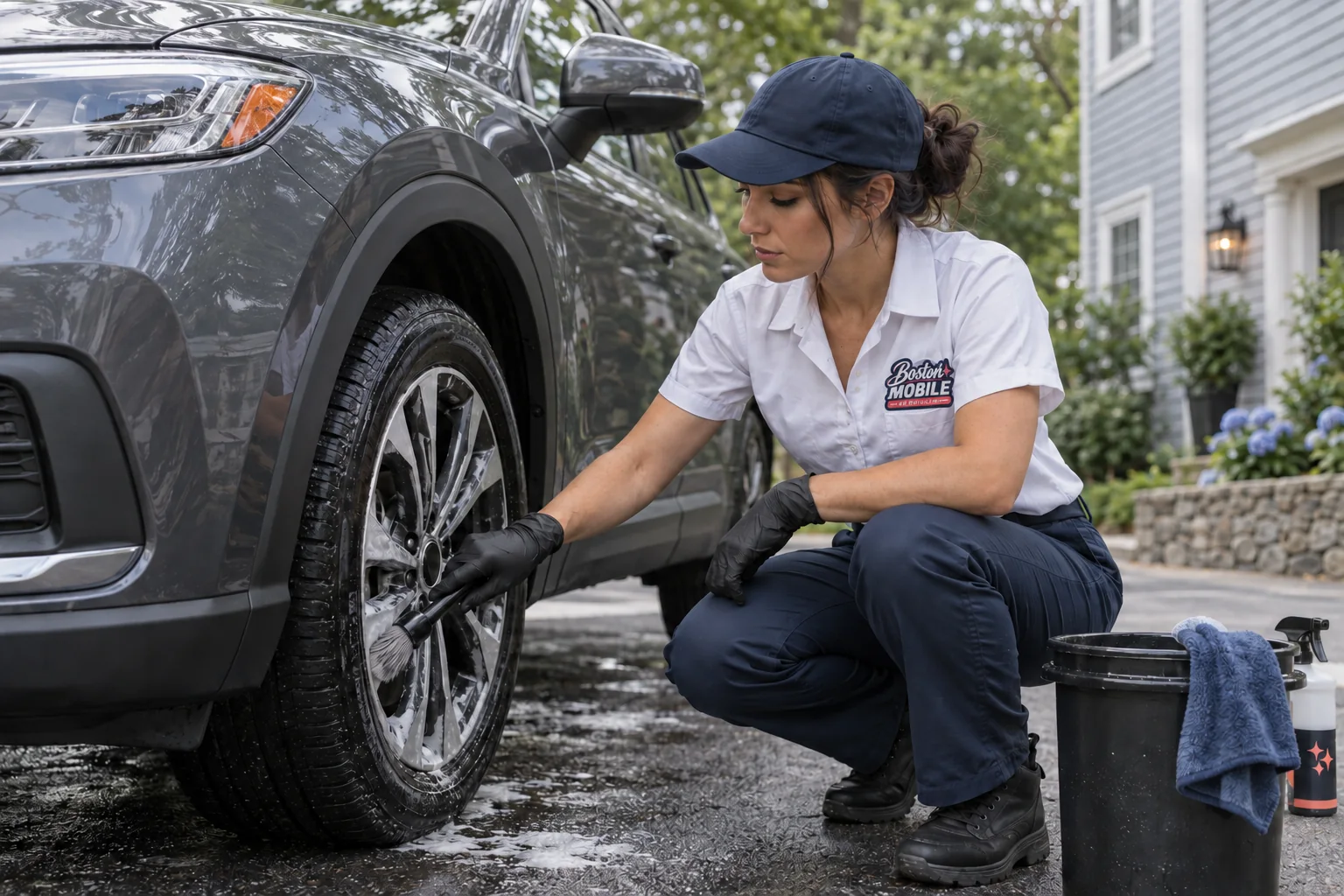
Wheels and tires collect their own combination of road residue and ordinary use. Check all four wheels rather than describing only the side you see from the curb. Note whether one wheel is noticeably different, whether buildup sits around spokes or outer faces, and whether there is visible damage or an unusual coating. The exterior package currently lists wheel and tire cleaning and tire dressing, but that does not make detailing a repair for curb damage, peeling finish, corrosion, or a mechanical concern.
If the vehicle has aftermarket wheels, a special finish, missing center caps, loose trim, or known damage, disclose that before the appointment. Do not expect the team to infer a material or prior treatment from a photo alone. You can ask how the visible wheel condition affects the quote and what result is realistic. The goal is a scope appropriate for accessible surfaces and their condition, not a promise to erase every permanent mark from a wheel that has been used through multiple seasons.
Glass, trim, jambs, and the fuel-door area deserve their own look
A vehicle can have relatively clean paint while glass, trim edges, door openings, or the fuel-door area still show residue. Review the windshield, side glass, mirrors, and rear glass for the visible concern you want considered. Then look at accessible door jambs, the trunk or liftgate jamb, and the fuel-door area. Those accessible jamb areas are part of the current exterior service description, but access and existing condition still matter.
Be realistic about what cleaning means on these surfaces. A cloudy appearance can come from surface film, but it can also involve pitting, scratches, worn trim, old adhesive, or another condition that cleaning will not repair. Do not use an abrasive household method or aggressive scraping simply to make the vehicle look ready for a quote. Tell the team about anything already applied and identify damaged trim or glass so it is not mistaken for ordinary buildup.
Separate decontamination and protection from paint correction
The exterior service can include clay-bar paint decontamination and a ceramic paint sealant when suitable. Clay treatment is intended for appropriate bonded surface contamination; it is not the same as polishing. A sealant is a protective step in the listed package, not a promise that scratches will disappear or that a multi-year ceramic coating has been installed. Ask which finish-care steps are suitable after the paint and any existing protection are reviewed.
Swirl marks, scratches, oxidation, etching, and dullness belong in a paint correction assessment, which the live exterior page identifies as separate from the detail. If colder-weather grime has made a defect more noticeable, note the affected panel and the improvement you hope for, but do not assume washing caused or can correct it. The paint-correction page is the relevant next conversation when appearance defects—not surface dirt—are the main concern.
Share wraps, matte paint, coatings, and repaint history
Finish history becomes especially important when the vehicle is covered by road film and the underlying surface is harder to evaluate. Tell the team if the car has a wrap, matte or satin paint, a coating, paint-protection film, a repainted panel, touch-up work, or a recent body repair. The current exterior page specifically asks customers to disclose wraps, coatings, repaints, and other finish concerns before the quote is confirmed.
Do not assume a treatment suitable for factory gloss paint is automatically suitable for every finish. Also mention lifting wrap edges, peeling clear coat, cracked film, loose badges, or damaged trim. Detailing is not body repair, and cleaning cannot restore a failing material. Early disclosure gives the team a chance to review what should be included, modified, excluded, or referred before equipment is set up around the vehicle.
Safe access is part of the service, not an afterthought
Boston Mobile Car Detailing brings water, power, and equipment to the coordinated location, but the parking space must still be safe, permitted, and practical. The published process asks for a place close to the car with room to work around it and directs customers to share garage, building, workplace, street-parking, or property rules. In colder weather, report snow piles, ice, poor drainage, narrow clearances, active plowing, or any other condition that could affect safe access.
A familiar parking spot is not automatically a workable detailing location. Confirm that mobile service is permitted, that the car can remain in the agreed space, and that doors or the trunk can be opened as needed. Do not reserve a public lane, block access, or assume a shared garage allows washing. If a property manager or workplace must approve the visit, obtain that approval before the appointment rather than asking the crew to negotiate access on arrival.
Have a weather and access backup conversation before the visit
Weather can change between a quote and an appointment. The current cancellation policy says that if weather or another unsafe condition prevents the team from completing the service, Boston Mobile Car Detailing will contact the customer to discuss a new time. It also asks customers to provide a safe, permitted place and disclose access restrictions. That is a scheduling safeguard, not a guarantee that every cold, wet, snowy, or windy day can proceed as originally planned.
Before booking, ask how the team wants location changes handled and what appointment-specific rescheduling terms apply. If you have a permitted alternative space, describe it in advance with clearance, access, and property rules. Do not move the service into an unapproved garage or onto an unsafe surface without coordination. If conditions change on the day, contact the team promptly and let them decide whether the planned work and location remain suitable.
Set realistic expectations for one cold-weather exterior visit
A thorough exterior visit can address the agreed accessible surface buildup and suitable finish-care steps. It cannot promise a permanently clean vehicle once it returns to wet or treated roads, and it cannot repair chips, corrosion, failing paint, cracked trim, wheel damage, or scratches. Heavy deposits and older marks may need additional review. The quote should describe the intended work; it should not be read as a guarantee that every visible difference is removable.
Think in terms of a useful improvement tied to the service: removing suitable everyday dirt and road film, cleaning wheels and tires, addressing accessible jamb areas, and considering decontamination and sealant when appropriate. If your priority is defect removal, name that separately. If your priority is simply maintaining a frequently used vehicle through colder months, say so. A realistic goal helps the team recommend exterior detailing, specialty care, or a later paint assessment without overselling one visit.
Choose a maintenance cadence from use and condition
There is no single colder-weather schedule that fits every car. Frequency depends on mileage, where the vehicle is parked, the roads it travels, how quickly film returns, the finish condition, and how clean you want it to remain. A daily commuter parked outdoors may need a different conversation from an occasional-use car stored indoors. Review the surface periodically and request care based on current condition rather than following a calendar without looking at the vehicle.
Maintenance plans are available across detailing packages on a monthly, every-6-weeks, or every-2-months schedule. Savings are up to 40 percent and vary by visit frequency, with a 2-month commitment. Your quote confirms the exact package, schedule, savings, and terms before enrollment; a quote request does not start a plan or book an appointment. Ask what exterior package would repeat and how new condition concerns are handled before deciding whether a plan is practical.
Know when a recurring visit needs a new scope
Maintenance should not freeze the first quote in time. New tree sap, paint transfer, a deep scratch, a damaged wheel, a wrap problem, heavy bonded contamination, or a newly repaired panel can change what is appropriate. A different parking location or a building-rule change can also affect the visit. Tell the team about those changes before the next appointment instead of assuming they fall within the original recurring package.
The same applies when buildup is much heavier than usual after extended driving or missed visits. Describe what changed and ask whether the planned exterior work still fits. A maintenance plan can provide a routine for ordinary care, but specialty services and paint correction remain separate assessments. Clear updates protect both expectations and the vehicle by allowing the team to confirm the current work rather than relying on an older condition description.
Prepare a concise exterior-care quote request
Include the year, make, model, body style, city or town, and proposed parking location. Describe the visible road film by panel, note the condition of all four wheels and the glass, and list isolated concerns such as rough paint, sap, water spots, scratches, or damage. Disclose wraps, coatings, paint-protection film, matte paint, repainted panels, and previous products or repair work. Identify the two or three areas that matter most instead of asking for an undefined perfect result.
Then explain the access plan: where the car will be parked, whether property permission is required, how much room is available, and whether current snow, ice, drainage, garage, or street conditions may interfere. Ask the team to confirm the included exterior steps, any separate assessment, the quote, and what happens if weather makes the location unsafe. Requesting a quote starts that review; it does not automatically book a visit. A specific description makes cold-weather exterior care easier to scope and keeps the expectations grounded in the car you actually have.
What to remember
- Describe road film, wheels, glass, jambs, and isolated finish concerns by location.
- Confirm which exterior-detail steps are suitable for the vehicle’s finish.
- Treat scratches, etching, oxidation, damage, and correction as separate from cleaning.
- Provide a safe, permitted parking plan and report cold-weather access hazards.
- Base maintenance on actual use and condition, and report changes before recurring visits.