
Full Interior & Exterior Detailing
How to Prepare for a Full Car Detail and Confirm the Quoted Scope
A full detail brings interior and exterior care into one visit, but the phrase does not answer every practical question. Your vehicle’s layout, condition, materials, parking location, and specialty concerns help determine the useful scope. Before requesting a quote, take a short inventory of the cabin and exterior, decide what matters most, and explain anything that may require separate assessment. This guide uses the current Boston Mobile Car Detailing service pages to show what to prepare, what to confirm in writing, and why a quote request is not yet a booked appointment.
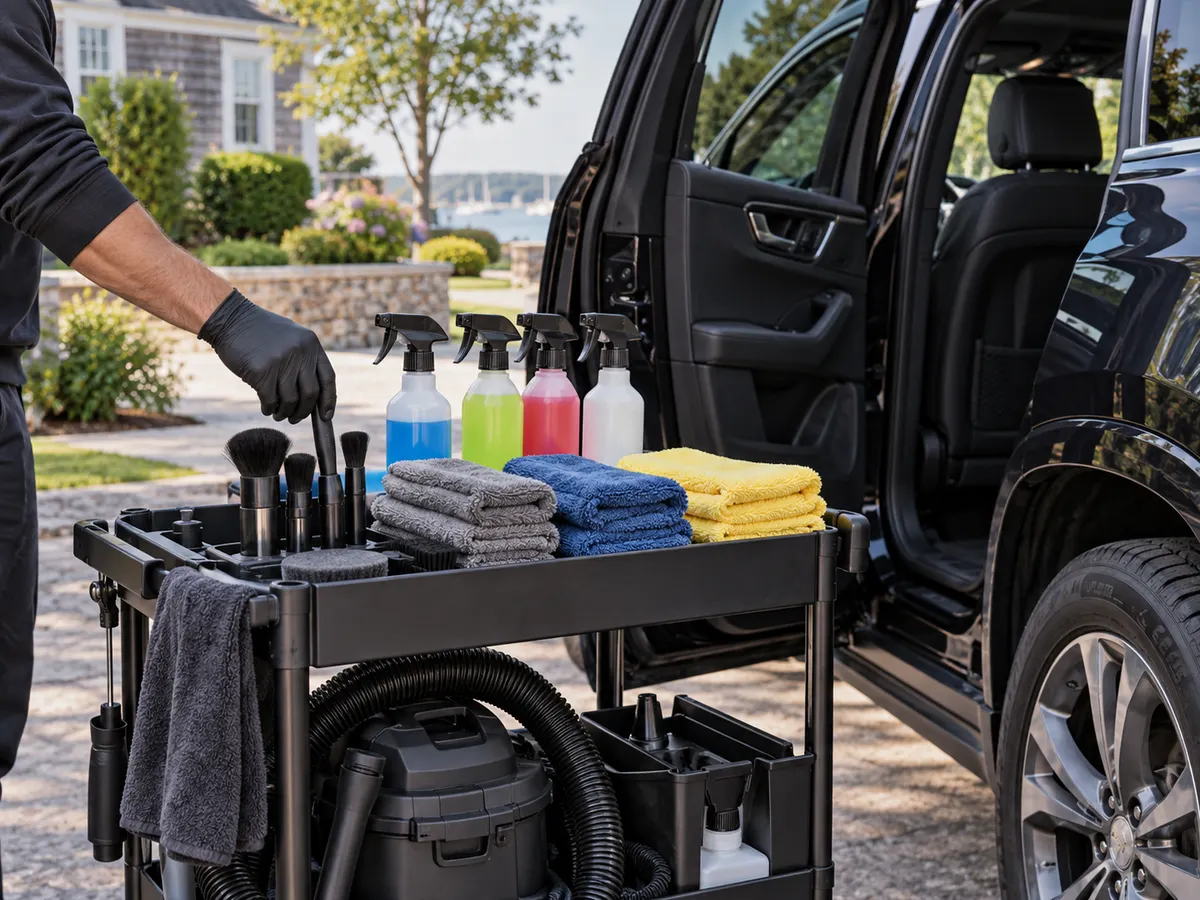
Understand what the current full-detail service brings together
The current full-detail page combines accessible interior cleaning with exterior washing and finish care. The listed cabin work includes vacuuming accessible seats, carpets, floor mats, and cargo areas; cleaning the dashboard, console, door panels, and interior glass; and using steam treatment, minor-stain attention, leather care, and interior protection when suitable for the material. This is broader than an interior-only visit because the exterior is addressed during the same planned service.
The listed exterior work includes a hand wash, wheel and tire cleaning, tire dressing, accessible door-jamb, trunk-jamb, and fuel-door cleaning, plus clay-bar paint decontamination and ceramic paint sealant when suitable for the finish. These are the live page’s present descriptions, not a promise that every vehicle receives an identical method. Paint condition, existing protection, delicate finishes, access, and the agreed quote still matter. Ask the team to state which tasks apply to your vehicle rather than treating a package label as the complete scope.
Walk through the vehicle before you submit the request
Begin inside and move in a consistent order: driver area, front passenger area, each rear row, and the trunk or cargo space. Note broad everyday buildup and isolated concerns separately. “Crumbs throughout the second row” and “a dried drink mark on one fabric seat” describe different needs. Look at carpet, mats, seat seams, door pockets, cup holders, interior glass, cargo flooring, and high-touch trim. You do not need to diagnose a material or choose a chemical treatment; describe what you can see and where it appears.
Then walk around the exterior in ordinary daylight. Look at paint, glass, wheels, tires, door jambs, the trunk jamb, and the fuel-door area. Record road film, rough-feeling paint, sap, water spots, swirl marks, scratches, dull sections, or other deposits by location. If the vehicle has a wrap, matte finish, coating, repaint, repair, or delicate trim, write that down. A clear condition summary helps the team distinguish routine full-detail work from a separate finish assessment before setting expectations.
Choose two or three priorities instead of asking for everything
A full detail covers both sides of the car, but customers still benefit from ranking priorities. Decide what would make the visit worthwhile: a more manageable family cabin, cleaner wheels, attention to a heavily used cargo area, or routine paint decontamination and protection. A short priority list guides the quote without demanding a perfect result from every surface. It also gives you something concrete to compare with the written scope when the team follows up.
Priorities are especially helpful when the vehicle has mixed conditions. The front cabin may need routine cleaning while the rear seat has a specific spill; the paint may have ordinary road film while one panel shows sap or visible scratches. State the general request and the exceptions. This prevents a single phrase such as “full reset” from hiding the areas that need separate discussion. If the team recommends another service for one concern, ask whether it is included, added, deferred, or outside the proposed work.
Share the vehicle size, layout, and relevant material details
Provide the year, make, model, and body style, and say whether the vehicle has two rows, three rows, a separate trunk, or an open cargo area. Mention a normally folded third row, frequently used cargo space, or rear seating that needs attention. A model name alone may not identify the configuration or how the car is used. Vehicle size and condition can affect the work, so the quote should reflect the actual layout rather than another customer’s vehicle.
Name materials when you know them, but do not guess. Fabric seats, leather surfaces, rubber liners, carpet mats, glossy trim, screens, wraps, matte finishes, repainted panels, and existing coatings can call for different care. Point out damage, loose trim, torn upholstery, failing clear coat, or worn leather before service. Cleaning can address suitable buildup, but existing wear or damage may remain. Documenting the starting condition helps keep the service conversation focused on realistic cleaning and protection rather than repair.
Separate routine cabin cleaning from specialty interior concerns
A full detail includes material-appropriate steam treatment and minor-stain attention, but it does not automatically include every deep or specialty process. The live service page identifies upholstery extraction, mold remediation, heavy odor treatment, and pet-hair removal as concerns that need separate assessment. Report a large spill, saturated fabric, embedded hair, persistent smell, visible growth, or recurring dampness when you first request the quote. Do not wait for the crew to discover the condition during the appointment.
Targeted upholstery extraction is reviewed according to the affected fabric, spill or stain history, planned treatment, and drying expectations. Persistent odor should be described by type, location, timing, and any known source. Visible mold or water intrusion needs its own assessment; the current mold page recommends in-shop remediation for more thorough work and limits mobile mold-related service to suitable accessible surface cleaning and surface-level water extraction. None of these results should be promised before the condition is reviewed.
Separate exterior cleaning and protection from paint correction
The exterior portion of a full detail cleans, decontaminates, and protects suitable finishes; it is not automatically a scratch-removal or machine-polishing service. The current full-detail and exterior pages both distinguish routine care from paint correction. If you are concerned about swirls, scratches, oxidation, etching, dullness, or a visibly different panel, identify those areas and explain the improvement you hope to achieve. The team can then decide whether a separate paint-condition review is appropriate.
A paint correction assessment considers affected panels, paint or coating history, previous repairs, and the desired result. The live page explicitly avoids promising that every scratch or defect can be corrected through detailing. Clay-bar decontamination and polishing also solve different problems: clay targets suitable bonded contamination, while polishing changes the appearance of the finish. Do not assume that a full detail’s clay step will correct defects or that sealant is a multi-year ceramic-coating installation.
Clear belongings without removing items that need an access plan
Remove loose belongings and valuables from the seats, floors, cup holders, door pockets, trunk, and cargo areas you want cleaned. This allows the team to see and reach the agreed surfaces and reduces confusion about personal property. Take out documents, electronics, medication, cash, work materials, sports gear, and loose child items. You are not cleaning the car for the detailer; you are making the requested areas available and protecting objects that should not be handled.
Installed child seats, mobility equipment, cargo dividers, pet barriers, work racks, organizers, and electronic accessories need a separate plan. Do not assume the team will remove, reinstall, or verify safety equipment. Tell the team what must remain in place and which areas will therefore be inaccessible. If you choose to remove an item yourself, follow its manufacturer instructions. The quote should make clear whether surrounding areas can be reached and whether any requested section will remain excluded because equipment stays installed.
Confirm the parking location before treating mobile service as workable
Boston Mobile Car Detailing brings water, power, and equipment, so customers do not need to supply utilities. The location still needs to be safe, permitted, and close enough for the mobile setup, with room to open the vehicle doors and work around the car. Share the actual town or neighborhood and where the vehicle is expected to be parked. A service-area listing does not override property rules, street restrictions, garage clearance, or site-specific access limits.
For an apartment, condo, office, garage, shopping location, or shared lot, check whether mobile detailing is allowed. Report gate procedures, loading rules, height limits, time restrictions, assigned-space limitations, and any required property approval. If the planned space may change, explain the likely alternative before booking. The published process says the team reviews the request, coordinates a suitable location, and confirms the visit only after the service and access details are agreed.
Review the quote line by line before approving it
A useful quote should let you identify the vehicle, the requested full-detail service, the included interior and exterior work, any separate specialty item, the location, and the price. Compare it with your priority list. Look for the cabin rows, trunk or cargo area, exterior steps, wheel and tire care, jambs, and finish-care items that matter to you. If something important is missing or described too broadly, ask for clarification before paying a deposit or arranging the date.
Also review the exclusions and conditions. Confirm whether a treatment is “when suitable,” whether access limits apply, whether a stain, odor, or paint concern has a separate scope, and what result is realistic. Ask what could change if the actual vehicle differs from the photos or description. If extra work is proposed after inspection, request the revised work and price before it proceeds. A full-detail quote should reduce ambiguity; it should not require you to infer the work from the package name.
Know the difference between a quote request and a booked appointment
Submitting the website form starts a quote conversation; it does not automatically reserve a time. The published process says the team reviews the vehicle, town, requested service, condition notes, and access details, then follows up with pricing and any questions. Availability discussed during that conversation is not the same as a confirmed appointment. Keep the written quote and wait for the team’s confirmation before planning around a date.
The current cancellation policy states that a deposit is required to book an appointment and that the amount and payment details are confirmed before the customer agrees. It also says an appointment is not confirmed until the deposit is received and the team confirms the appointment details. For appointments booked by phone, the published deposit is 15 percent of the quoted service total. Review any booking-specific cancellation or rescheduling terms provided before payment instead of assuming a general rule.
Prepare for the day of the mobile full detail
Before the scheduled time, place the vehicle in the agreed location if permitted, remove the loose belongings discussed, and make sure the crew can access the keys as arranged. Confirm that doors, the trunk or liftgate, and the fuel-door area can be reached safely. Keep children and pets away from the immediate work area and equipment. If a gate, garage, workplace, or parking rule changes, contact the team promptly rather than expecting the crew to find another space on arrival.
Do a final condition check and report anything new: a fresh spill, newly discovered pet hair, new moisture, warning light, damaged trim, paint transfer, or a panel that was repaired after the quote. A material change can affect whether the planned work remains suitable. The team may need to revise the scope, refer a concern, or reschedule if safe access is no longer available. That is better than forcing an outdated quote onto a vehicle or location that now presents a different job.
Use a simple confirmation checklist
Before booking, confirm six things: the correct vehicle and configuration; the interior areas included; the exterior steps included; any specialty services or exclusions; the approved location and access plan; and the quoted total with booking terms. Ask about expected timing and any material-specific aftercare that is relevant to the planned work. If one answer depends on inspection, note that explicitly and ask how approval will be handled if the recommendation changes.
Keep the quote, deposit receipt, appointment confirmation, and any preparation instructions together. If you later reschedule or change the requested work, make sure the revised details are documented. A well-prepared full-detail visit is not about demanding an exhaustive treatment. It is about matching the vehicle’s condition to a clear scope, giving the team practical access, and agreeing on realistic expectations before work begins.
Decide whether future maintenance fits after the full detail
After the vehicle has received the agreed inside-and-out care, recurring service may help manage ordinary buildup. Maintenance visits are available monthly, every 6 weeks, or every 2 months across detailing packages. Savings are up to 40 percent and vary by frequency; plans have a 2-month commitment. The quote confirms the package, schedule, exact savings, and parking arrangement before enrollment. Requesting information does not start a plan or book a visit.
Do not assume that a maintenance visit repeats every specialty task from the original full detail. A new spill, embedded pet hair, persistent odor, water intrusion, paint defect, or other change can require a new scope. Tell the team what has changed before the next visit. Maintenance works best when it is tied to current vehicle use and condition, not when an older quote is treated as a permanent promise for every future appointment.
What to remember
- Document the cabin, exterior, vehicle layout, materials, and two or three highest priorities.
- Confirm which full-detail steps apply and which specialty concerns are separate.
- Clear loose belongings and agree on access around installed equipment.
- Verify safe, permitted parking and property rules before booking.
- Review the written scope, price, deposit, and confirmation details before treating the appointment as reserved.